Decoding Stake Tier Shifts: How Minimum Bet Adjustments Reshape Session Durations Across Licensed Platforms
Avery Klein · Sep 25, 2026
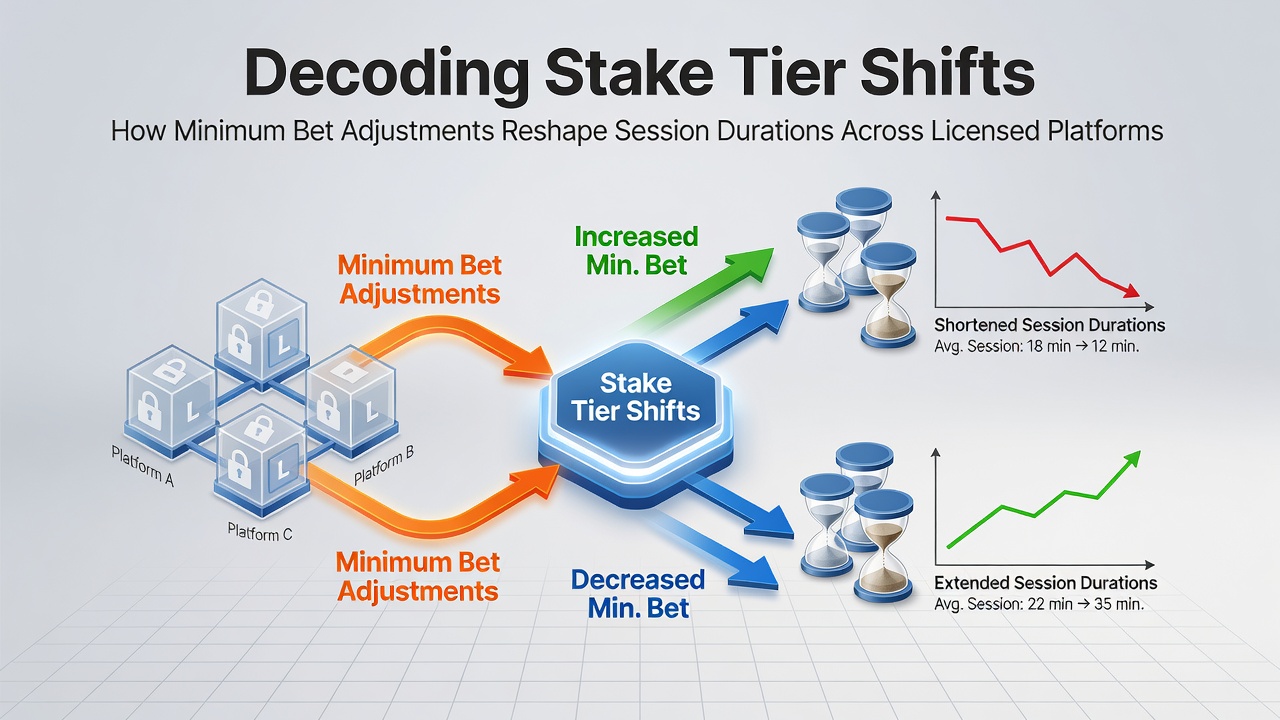
Decoding Stake Tier Shifts: How Minimum Bet Adjustments Reshape Session Durations Across Licensed Platforms
Minimum bet adjustments on licensed platforms have drawn attention from analysts who track player behavior patterns, and data from multiple jurisdictions shows these changes often correlate with measurable shifts in average session lengths. Platforms categorize stakes into tiers that range from low-entry micro tables to premium high-limit sections, and operators adjust the floor amounts within each tier based on regulatory guidelines, market demand, and revenue targets. Researchers at institutions such as the University of Nevada, Las Vegas have documented how even modest increases in minimum bets can compress playtime for recreational participants while leaving high-volume players relatively unaffected.
Stake Tier Frameworks in Licensed Markets
Licensed operators structure their tables and slots around discrete stake tiers that reflect both regulatory caps and commercial strategy, and these frameworks determine the entry point for each game variant. In many North American and Australian markets, regulators require clear disclosure of minimum and maximum bets, which creates transparency that players use when selecting sessions. Data collected by the Nevada Gaming Control Board reveals that tables with lower minimums sustain longer average durations because participants can extend their bankrolls across more hands or spins before depletion occurs. Conversely, upward adjustments in minimums force quicker decisions about whether to continue or exit, producing shorter recorded sessions across aggregated platform metrics.
Operators monitor these metrics closely because session duration directly influences overall handle and the pace at which bonuses or loyalty rewards are earned. Platforms that raise minimums on mid-tier blackjack or roulette tables frequently observe a redistribution of play toward either higher-stakes sections or entirely different game types, and this migration appears in anonymized telemetry shared with industry research groups. The Australian Gambling Research Centre has published findings indicating that such redistributions stabilize after approximately six to eight weeks, once regular players adapt to the new entry points.
Measured Effects on Session Length
Empirical records from platform operators indicate that a 20 percent increase in the minimum bet on a given tier typically reduces average session duration by 12 to 18 minutes for players whose bankrolls fall below a certain multiple of the new floor. Those who maintain larger reserves relative to the stake experience smaller reductions, often under five minutes, because they absorb the change without altering their overall risk exposure. Analysts note that these patterns hold across both live dealer and RNG environments, although live tables show slightly slower compression due to the social pacing inherent in physical or streamed play.
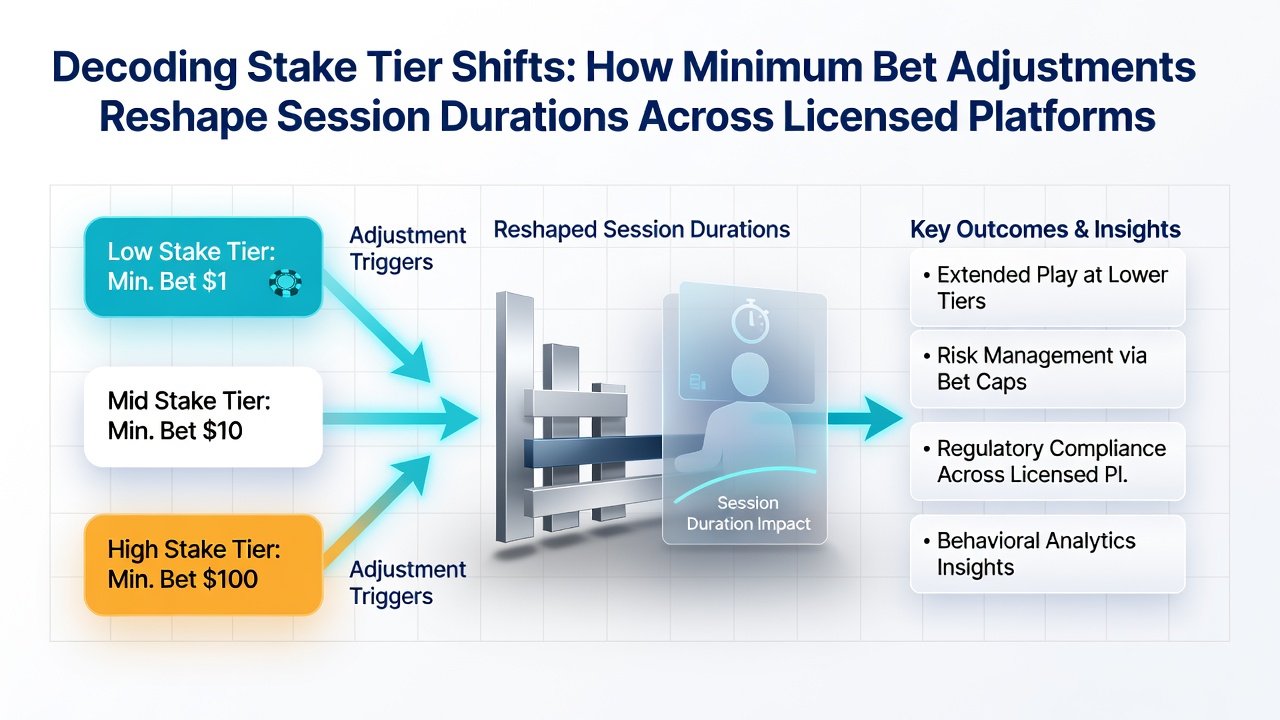
September 2026 brought additional clarity when several European and Canadian licensing authorities released updated reporting templates that require operators to segment session data by stake tier. The resulting datasets allow direct comparison of pre- and post-adjustment durations, and preliminary releases already show consistent directional effects. Players who previously occupied mid-tier tables now appear more frequently in lower tiers where available, or they shorten visits when lower options are limited. This behavioral response aligns with earlier observations from the Canadian Gaming Association, which tracked similar movements after provincial minimum adjustments in 2024.
Player Adaptation and Platform Response
Adaptation occurs at both individual and aggregate levels. Individuals test new minimums for a few sessions, then settle into patterns that match their bankroll comfort, while platforms respond by introducing promotional minimums during off-peak hours or by expanding the number of tables at transitional stake levels. Industry reports from the European Gaming and Betting Association highlight that these countermeasures can restore 60 to 70 percent of the original session duration distribution within one quarter, although complete reversion remains rare. The residual shift tends to favor shorter, more frequent visits among mid-tier players, a trend that appears in both desktop and mobile telemetry.
Those who study loyalty program data observe that reward accrual rates also influence how quickly players accept higher minimums. When points or cashback scale with stake size, some participants tolerate shorter sessions because the per-hand value rises enough to offset reduced volume. Others migrate toward games with more flexible betting structures, such as certain video poker variants or progressive side bets that allow smaller base wagers. Platform designers therefore calibrate minimums not only for direct revenue impact but also for secondary effects on game mix and reward engagement.
Conclusion
Stake tier adjustments continue to serve as a primary lever for licensed operators seeking to balance player accessibility with commercial objectives, and the resulting changes in session duration are now quantifiable across multiple regulatory environments. Continued refinement of reporting standards will likely produce even more granular insights, enabling platforms to predict migration patterns before implementing changes. Observers expect that future minimum-bet decisions will incorporate session-duration forecasts alongside traditional revenue projections, creating a more data-driven approach to tier management across global markets.